Classes | |
| struct | div_t |
| Division type for integers. More... | |
| struct | ldiv_t |
| Division type for long integers. More... | |
| struct | lldiv_t |
| Division type for long long integers. More... | |
| struct | imaxdiv_t |
| Division type for maximal integer storage. More... | |
Macros | |
| #define | EXIT_FAILURE 1 |
| #define | EXIT_SUCCESS 0 |
| #define | RAND_MAX (0x7fffffff) |
| #define | MB_CUR_MAX sizeof(wchar_t) |
| Length of the current locale's multi-byte character. More... | |
Functions | |
| void | abort (void) __attribute__((noreturn)) |
| int | atexit (void(*)(void)) |
| void | exit (int) __attribute__((noreturn)) |
| void | _Exit (int) __attribute__((noreturn)) |
| TODO: CLEANUP DOC Terminates the process normally by returning control to the host environment, but without performing any of the regular cleanup tasks for terminating processes (as function exit does). More... | |
| int | at_quick_exit (void(*)(void)) |
| void | quick_exit (int) __attribute__((noreturn)) |
| int | cxa_atexit (void(*)(void *), void *, void *) |
| char * | getenv (const char *) |
| int | system (const char *) |
| int | mblen (const char *, size_t) |
| int | mbtowc (wchar_t *__restrict, const char *__restrict, size_t) |
| int | wctomb (char *, wchar_t) |
| size_t | mbstowcs (wchar_t *__restrict, const char *__restrict, size_t) |
| size_t | wcstombs (char *__restrict, const wchar_t *__restrict, size_t) |
| int | atoi (const char *str) |
| Interprets an integer value in a byte string pointed to by str. More... | |
| long | atol (const char *str) |
| Interprets a Long value in a byte string pointed to by str. More... | |
| long long | atoll (const char *str) |
| Interprets a Long Long value in a byte string pointed to by str. More... | |
| double | atof (const char *str) |
| Interprets a floating-point value in a byte string pointed to by str. More... | |
| float | strtof (const char *__restrict str, char **__restrict str_end) |
| Interprets a floating-point value in a byte string pointed to by str. More... | |
| double | strtod (const char *__restrict str, char **__restrict str_end) |
| Interprets a floating-point value in a byte string pointed to by str. More... | |
| long | strtol (const char *__restrict str, char **__restrict str_end, int base) |
| Interprets an long value in a byte string pointed to by str. More... | |
| unsigned long | strtoul (const char *__restrict str, char **__restrict str_end, int base) |
| Interprets an unsigned long value in a byte string pointed to by str. More... | |
| long long | strtoll (const char *__restrict str, char **__restrict str_end, int base) |
| Interprets an long long value in a byte string pointed to by str. More... | |
| unsigned long long | strtoull (const char *__restrict str, char **__restrict str_end, int base) |
| Interprets an unsigned long long value in a byte string pointed to by str. More... | |
| long double | strtold (const char *__restrict, char **__restrict) |
| int | abs (int n) |
| Computes the absolute value of an integer number. More... | |
| long | labs (long n) |
| Computes the absolute value of an long number. More... | |
| long long | llabs (long long n) |
| Computes the absolute value of an long long number. More... | |
| intmax_t | imaxabs (intmax_t j) |
| Computes the absolute value of an intmax_t number. More... | |
| div_t | div (int x, int y) |
| Computes both the quotient and the remainder of the division of the numerator x by the denominator y. More... | |
| ldiv_t | ldiv (long x, long y) |
| Computes both the quotient and the remainder of the division of the numerator x by the denominator y. More... | |
| lldiv_t | lldiv (long long x, long long y) |
| Computes both the quotient and the remainder of the division of the numerator x by the denominator y. More... | |
| imaxdiv_t | imaxdiv (intmax_t numer, intmax_t denom) |
| Computes both the quotient and the remainder of the division of the numerator x by the denominator y. More... | |
| int | rand_r (unsigned int *ctx) |
| int | rand (void) |
| Returns a pseudo-random integer value between 0 and. More... | |
| void | srand (unsigned seed) |
| Seeds the pseudo-random number generator used by. More... | |
| int | heapsort (void *vbase, size_t nmemb, size_t size, int(*compar)(const void *, const void *)) |
| Sorts the given array pointed to by vbase in ascending order. More... | |
| int | heapsort_r (void *vbase, size_t nmemb, size_t size, void *thunk, int(*compar)(void *, const void *, const void *)) |
| Sorts the given array pointed to by vbase in ascending order. More... | |
| void * | bsearch (const void *key, const void *ptr, size_t count, size_t size, int(*comp)(const void *, const void *)) |
| Finds an element equal to element pointed to by key in an array pointed to by ptr. More... | |
| void | qsort_r (void *a, size_t n, size_t es, void *thunk, int(*cmp)(void *, const void *, const void *)) |
| Sorts the given array pointed to by ptr in ascending order. More... | |
| void | qsort (void *a, size_t n, size_t es, int(*compar)(const void *, const void *)) |
| Sorts the given array pointed to by ptr in ascending order. More... | |
| void * | malloc (size_t size) |
| Allocates size bytes of uninitialized storage. More... | |
| void | free (void *ptr) |
| Deallocates allocated memory space. More... | |
| void * | calloc (size_t num, size_t size) |
| Allocates memory for an array of given number objects of size and initializes all bytes in the allocated storage to zero. More... | |
| void * | realloc (void *ptr, size_t size) |
| Reallocates the given area of memory. More... | |
| void * | reallocf (void *ptr, size_t size) |
| Reallocates the given area of memory. More... | |
Class Documentation
◆ div_t
| struct div_t |
◆ ldiv_t
| struct ldiv_t |
◆ lldiv_t
| struct lldiv_t |
◆ imaxdiv_t
| struct imaxdiv_t |
Macro Definition Documentation
◆ EXIT_FAILURE
| #define EXIT_FAILURE 1 |
Expands to 1. Indicates program execution execution status.
◆ EXIT_SUCCESS
| #define EXIT_SUCCESS 0 |
Expands to 0. indicates program execution execution status.
◆ MB_CUR_MAX
| #define MB_CUR_MAX sizeof(wchar_t) |
Length of the current locale's multi-byte character.
We are faking this for now, since we don't provide locale support.
◆ RAND_MAX
| #define RAND_MAX (0x7fffffff) |
Function Documentation
◆ _Exit()
| void _Exit | ( | int | ) |
TODO: CLEANUP DOC Terminates the process normally by returning control to the host environment, but without performing any of the regular cleanup tasks for terminating processes (as function exit does).
No object destructors, nor functions registered by atexit or at_quick_exit are called
Referenced by __attribute__().
◆ abort()
| void abort | ( | void | ) |
Referenced by __attribute__().
◆ abs()
| int abs | ( | int | n | ) |
Computes the absolute value of an integer number.
Computes the absolute value of an integer number. The behavior is undefined if the result cannot be represented by the return type.
- Parameters
-
n integer value
- Returns
- The absolute value of n (i.e. |n|), if it is representable.
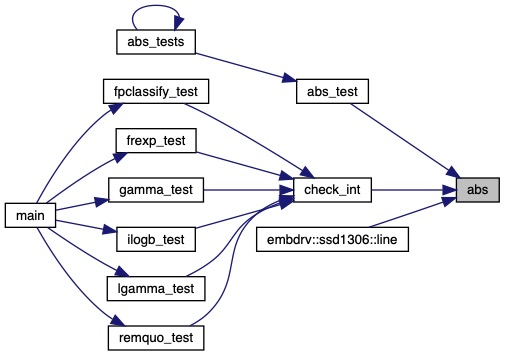
Referenced by abs_test(), check_int(), and embdrv::ssd1306::line().
◆ at_quick_exit()
| int at_quick_exit | ( | void(*)(void) | ) |
◆ atexit()
| int atexit | ( | void(*)(void) | ) |
Referenced by os::freertos::register_threadexit_func().
◆ atof()
| double atof | ( | const char * | str | ) |
Interprets a floating-point value in a byte string pointed to by str.
Interprets a floating-point value in a byte string pointed to by str. Function discards any whitespace characters (as determined by
- See also
- isspace() until first non-whitespace character is found. Then it takes as many characters as possible to form a valid floating-point representation and converts them to a floating-point value. The valid floating-point value can be one of the following: 1) decimal floating-point expression. It consists of the following parts: a) (optional) plus or minus sign b) nonempty sequence of decimal digits optionally containing decimal-point character c) (optional) e or E followed with optional minus or plus sign and nonempty sequence of decimal digits (defines exponent)
- Parameters
-
str pointer to the null-terminated byte string to be interpreted
- Returns
- double value corresponding to the contents of str on success. If the converted value falls out of range of corresponding return type, the return value is undefined. If no conversion can be performed, 0.0 is returned.
References NULL, and strtod().
Referenced by atof_test().

◆ atoi()
| int atoi | ( | const char * | str | ) |
Interprets an integer value in a byte string pointed to by str.
Interprets an integer value in a byte string pointed to by str. Discards any whitespace characters until the first non-whitespace character is found, then takes as many characters as possible to form a valid integer number representation and converts them to an integer value. The valid integer value consists of the following parts: a) (optional) plus or minus sign b) numeric digits
- Parameters
-
str pointer to the null-terminated byte string to be interpreted
- Returns
- Integer value corresponding to the contents of str on success. If the converted value falls out of range of corresponding return type, the return value is undefined. If no conversion can be performed, 0 is returned.
References isdigit().
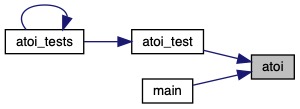
Referenced by atoi_test(), and main().
◆ atol()
| long atol | ( | const char * | str | ) |
Interprets a Long value in a byte string pointed to by str.
Interprets a Long value in a byte string pointed to by str. Discards any whitespace characters until the first non-whitespace character is found, then takes as many characters as possible to form a valid long number representation and converts them to an long value. The valid Long value consists of the following parts: a) (optional) plus or minus sign b) numeric digits
- Parameters
-
str pointer to the null-terminated byte string to be interpreted
- Returns
- long value corresponding to the contents of str on success. If the converted value falls out of range of corresponding return type, the return value is undefined. If no conversion can be performed, 0 is returned.
References isdigit(), and isspace().
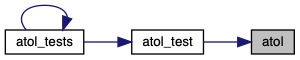
Referenced by atol_test().
◆ atoll()
| long long atoll | ( | const char * | str | ) |
Interprets a Long Long value in a byte string pointed to by str.
Interprets a Long Long value in a byte string pointed to by str. Discards any whitespace characters until the first non-whitespace character is found, then takes as many characters as possible to form a valid long number representation and converts them to an long long value. The valid Long long value consists of the following parts: a) (optional) plus or minus sign b) numeric digits
- Parameters
-
str pointer to the null-terminated byte string to be interpreted
- Returns
- long value corresponding to the contents of str on success. If the converted value falls out of range of corresponding return type, the return value is undefined. If no conversion can be performed, 0 is returned.
References isdigit(), and isspace().
Referenced by atoll_test().

◆ bsearch()
| void* bsearch | ( | const void * | key, |
| const void * | ptr, | ||
| size_t | count, | ||
| size_t | size, | ||
| int(*)(const void *, const void *) | comp | ||
| ) |
Finds an element equal to element pointed to by key in an array pointed to by ptr.
- Parameters
-
key pointer to the element to search for ptr pointer to the array to examine count number of element in the array size size of each element in the array in bytes comp comparison function which returns a negative integer value if the first argument is less than the second,a positive integer value if the first argument is greater than the second and zero if the arguments are equal. key is passed as the first argument, an element from the array as the second. The signature of the comparison function should be equivalent to the following: int cmp(const void *a, const void *b); The function must not modify the objects passed to it and must return consistent results when called for the same objects, regardless of their positions in the array.
- Returns
- Pointer to an element in the array that compares equal to *key, or null pointer if such element has not been found.
◆ calloc()
Allocates memory for an array of given number objects of size and initializes all bytes in the allocated storage to zero.
Allocates memory for an array of num objects of size size and initializes all bytes in the allocated storage to zero.
- Parameters
-
num number of objects size size of the array
- Returns
- (None)
References malloc(), memset(), MUL_NO_OVERFLOW, NULL, and SIZE_MAX.
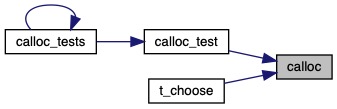
Referenced by calloc_test(), and t_choose().
◆ cxa_atexit()
| int cxa_atexit | ( | void(*)(void *) | , |
| void * | , | ||
| void * | |||
| ) |
◆ div()
| div_t div | ( | int | x, |
| int | y | ||
| ) |
Computes both the quotient and the remainder of the division of the numerator x by the denominator y.
Computes both the quotient and the remainder of the division of the numerator x by the denominator y.
- Parameters
-
x integer values y integer values
- Returns
- If both the remainder and the quotient can be represented as objects of the corresponding type (int, long, long long, imaxdiv_t, respectively), returns both as an object of type
If either the remainder or the quotient cannot be represented, the behavior is undefined.
References r.
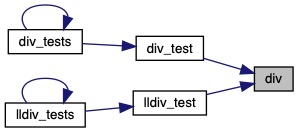
Referenced by div_test(), and lldiv_test().
◆ exit()
| void exit | ( | int | ) |
Referenced by main().
◆ free()
| void free | ( | void * | ptr | ) |
Deallocates allocated memory space.
Deallocates the space previously allocated by
The behavior is undefined if the value of ptr does not equal a value returned earlier by
The behavior is undefined if the memory area referred to by ptr has already been deallocated, that is, free() or realloc has already been called with ptr as the argument and no calls to malloc, calloc or realloc resulted in a pointer equal to ptr afterwards.
The behavior is undefined if after free returns, an access is made through the pointer ptr (unless another allocation function happened to result in a pointer value equal to ptr)
- Parameters
-
ptr pointer to the memory to deallocate
free should NEVER be called before malloc is init'd
free should NEVER be called before malloc is init'd
References assert, container_of, defrag_free_list(), embvm::VirtualHeap< THeapImpl >::free(), initialized_, list_add_tail(), list_for_each_entry, list_insert(), alloc_node_t::node, ll_head::prev, r, tx_byte_release(), and TX_SUCCESS.
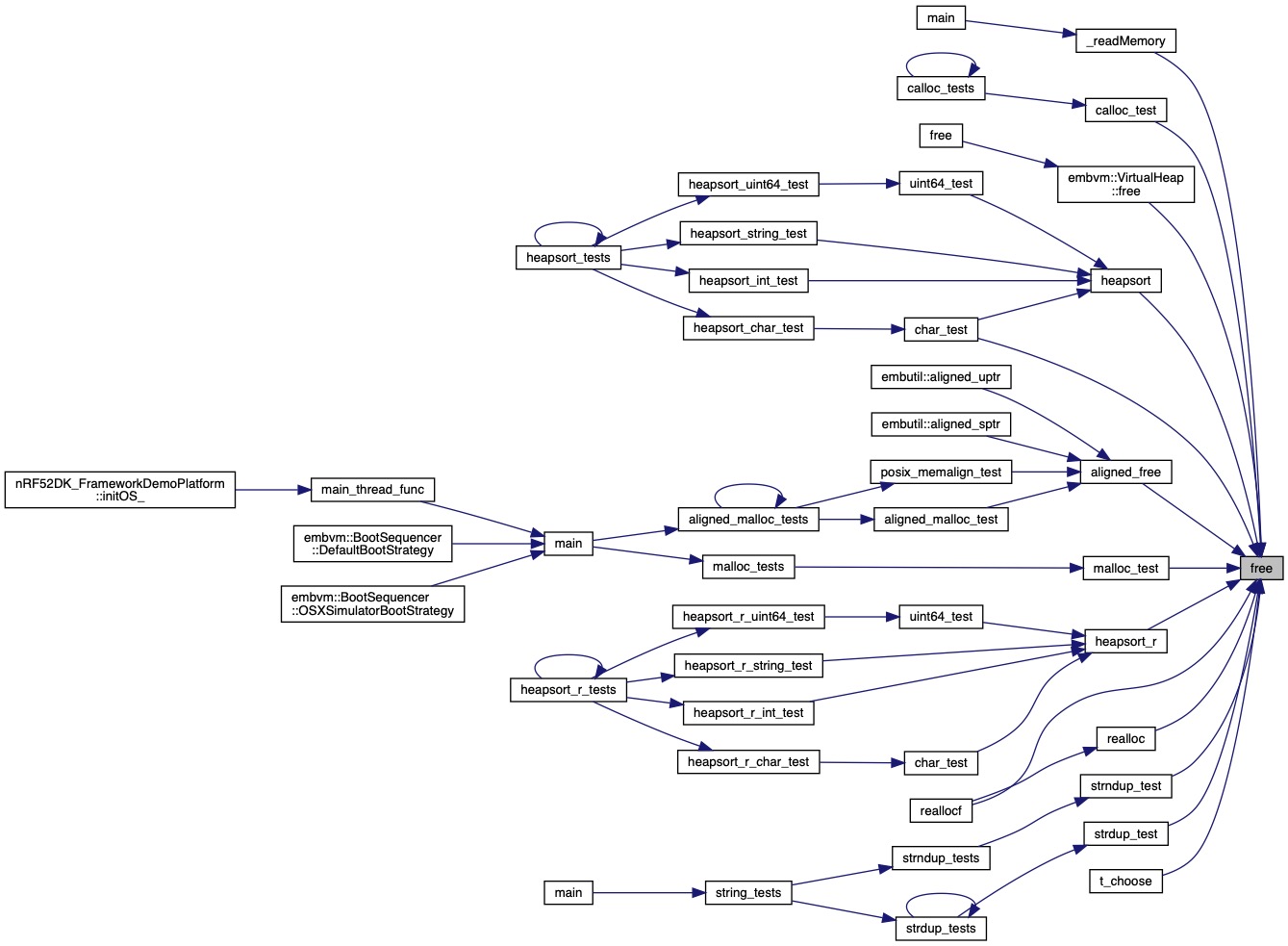
Referenced by _readMemory(), aligned_free(), calloc_test(), char_test(), embvm::VirtualHeap< THeapImpl >::free(), heapsort(), heapsort_r(), malloc_test(), realloc(), reallocf(), strdup_test(), strndup_test(), and t_choose().
◆ getenv()
| char* getenv | ( | const char * | ) |
◆ heapsort()
Sorts the given array pointed to by vbase in ascending order.
The heapsort() function is a modified selection sort. It sorts an array of nmemb objects, the initial member of which is pointed to by vbase. The size of each object is specified by size.
The contents of the array base are sorted in ascending order according to a comparison function pointed to by compar, which requires two arguments pointing to the objects being compared.
- Parameters
-
vbase a pointer to the array to sort nmemb the number of objects to sort size the size of each object in the array compar comparison function which returns a negative integer value if the first argument is less than the second,a positive integer value if the first argument is greater than the second and zero if the arguments are equal. key is passed as the first argument, an element from the array as the second. The signature of the comparison function should be equivalent to the following: int cmp(const void *a, const void *b);
- Returns
- the value 0 if successful; otherwise the value -1 is returned and the global variable errno is set to indicate the error.
Referenced by _qsort().
◆ heapsort_r()
| int heapsort_r | ( | void * | vbase, |
| size_t | nmemb, | ||
| size_t | size, | ||
| void * | thunk, | ||
| int(*)(void *, const void *, const void *) | compar | ||
| ) |
Sorts the given array pointed to by vbase in ascending order.
It sorts an array of nmemb objects, the initial member of which is pointed to by vbase. The size of each object is specified by size. The heapsort_r() function behaves identically to
- See also
- heapsort(), except that it takes an additional argument, thunk, which is passed unchanged as the first argument to function pointed to compar. This allows the comparison function to access additional data without using global variables, and thus heapsort_r() is suitable for use in functions which must be reentrant. And is therefore reentrant and safe to use in threads.
The contents of the array base are sorted in ascending order according to a comparison function pointed to by compar, which requires two arguments pointing to the objects being compared.
- Parameters
-
vbase a pointer to the array to sort nmemb the number of objects to sort size the size of each object in the array thunk additional data(variable) for compar compar comparison function which returns a negative integer value if the first argument is less than the second,a positive integer value if the first argument is greater than the second and zero if the arguments are equal. key is passed as the first argument, an element from the array as the second. The signature of the comparison function should be equivalent to the following: int cmp(const void *a, const void *b);
- Returns
- the value 0 if successful; otherwise the value -1 is returned and the global variable errno is set to indicate the error.
Referenced by _qsort().
◆ imaxabs()
Computes the absolute value of an intmax_t number.
Computes the absolute value of an intmax_t number. The behavior is undefined if the result cannot be represented by the return type.
- Parameters
-
j value
- Returns
- The absolute value of n (i.e. |n|), if it is representable.
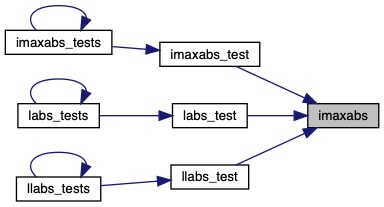
Referenced by imaxabs_test(), labs_test(), and llabs_test().
◆ imaxdiv()
Computes both the quotient and the remainder of the division of the numerator x by the denominator y.
Computes both the quotient and the remainder of the division of the numerator x by the denominator y. Computes quotient and remainder simultaneously. The quotient is the algebraic quotient with any fractional part discarded (truncated towards zero). The remainder is such that quot * y + rem == x.
Computes the quotient (the result of the expression x/y) and remainder (the result of the expression xy) simultaneously.
- Parameters
-
numer intmax_t values (numerator) denom intmax_t values (denominator)
- Returns
- If both the remainder and the quotient can be represented as objects of the corresponding type (int, long, long long, imaxdiv_t, respectively), returns both as an object of type
If either the remainder or the quotient cannot be represented, the behavior is undefined.
References imaxdiv_t::quot, and imaxdiv_t::rem.
◆ labs()
| long labs | ( | long | n | ) |
Computes the absolute value of an long number.
Computes the absolute value of an long number. The behavior is undefined if the result cannot be represented by the return type.
- Parameters
-
n long value
- Returns
- The absolute value of n (i.e. |n|), if it is representable.
Referenced by check_long().

◆ ldiv()
| ldiv_t ldiv | ( | long | x, |
| long | y | ||
| ) |
Computes both the quotient and the remainder of the division of the numerator x by the denominator y.
Computes both the quotient and the remainder of the division of the numerator x by the denominator y. Computes quotient and remainder simultaneously. The quotient is the algebraic quotient with any fractional part discarded (truncated towards zero). The remainder is such that quot * y + rem == x.
Computes the quotient (the result of the expression x/y) and remainder (the result of the expression xy) simultaneously.
- Parameters
-
x integer values y integer values
- Returns
- If both the remainder and the quotient can be represented as objects of the corresponding type (int, long, long long, imaxdiv_t, respectively), returns both as an object of type
If either the remainder or the quotient cannot be represented, the behavior is undefined.
References r.
◆ llabs()
| long long llabs | ( | long long | n | ) |
Computes the absolute value of an long long number.
Computes the absolute value of an long long number. The behavior is undefined if the result cannot be represented by the return type.
- Parameters
-
n long long value
- Returns
- The absolute value of n (i.e. |n|), if it is representable.
Referenced by check_longlong().

◆ lldiv()
| lldiv_t lldiv | ( | long long | x, |
| long long | y | ||
| ) |
Computes both the quotient and the remainder of the division of the numerator x by the denominator y.
Computes both the quotient and the remainder of the division of the numerator x by the denominator y. Computes quotient and remainder simultaneously. The quotient is the algebraic quotient with any fractional part discarded (truncated towards zero). The remainder is such that quot * y + rem == x.
Computes the quotient (the result of the expression x/y) and remainder (the result of the expression xy) simultaneously.
- Parameters
-
x integer values y integer values
- Returns
- If both the remainder and the quotient can be represented as objects of the corresponding type (int, long, long long, imaxdiv_t, respectively), returns both as an object of type
If either the remainder or the quotient cannot be represented, the behavior is undefined.
References lldiv_t::quot, and lldiv_t::rem.
◆ malloc()
| void* malloc | ( | size_t | size | ) |
Allocates size bytes of uninitialized storage.
If size is zero, the behavior is implementation defined (null pointer may be returned, or some non-null pointer may be returned that may not be used to access storage, but has to be passed to
- See also
- free). malloc is thread-safe: it behaves as though only accessing the memory locations visible through its argument, and not any static storage.
- Parameters
-
size number of bytes to allocate
- Returns
- On success, returns the pointer to the beginning of newly allocated memory. The returned pointer must be deallocated with
In the ThreadX implementaiton, we make sure the ThreadX pool has been created before we try to allocate memory, or there will be an error. We sleep our threads until memory has been added.
References align_up, embvm::VirtualHeap< THeapImpl >::alloc(), ALLOC_HEADER_SZ, assert, alloc_node_t::block, initialized_, list_del(), list_for_each_entry, list_insert(), malloc_pool_, MIN_ALLOC_SZ, ll_head::next, alloc_node_t::node, NULL, r, alloc_node_t::size, tx_byte_allocate(), TX_SUCCESS, tx_thread_sleep(), and TX_WAIT_FOREVER.
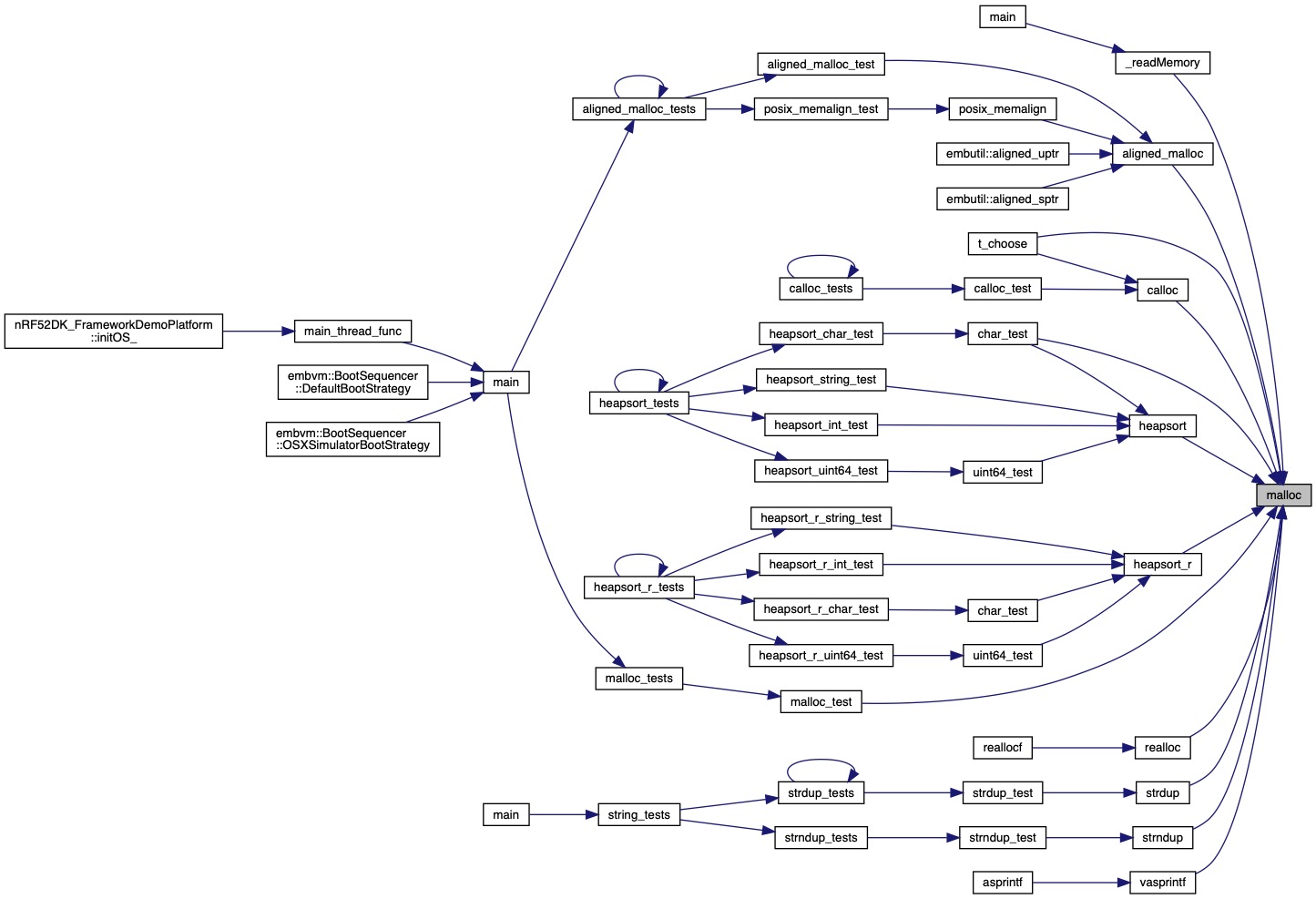
Referenced by _readMemory(), aligned_malloc(), calloc(), char_test(), heapsort(), heapsort_r(), malloc_test(), realloc(), strdup(), strndup(), t_choose(), and vasprintf().
◆ mblen()
| int mblen | ( | const char * | , |
| size_t | |||
| ) |
◆ mbstowcs()
◆ mbtowc()
◆ qsort()
Sorts the given array pointed to by ptr in ascending order.
Sorts the given array pointed to by ptr in ascending order. The array contains count elements of size bytes. Function pointed to by comp is used for object comparison.
- Parameters
-
a pointer to the element to sort n number of element in the array es size of each element in the array in bytes compar comparison function which returns a negative integer value if the first argument is less than the second,a positive integer value if the first argument is greater than the second and zero if the arguments are equal. key is passed as the first argument, an element from the array as the second. The signature of the comparison function should be equivalent to the following: int cmp(const void *a, const void *b); The function must not modify the objects passed to it and must return consistent
Referenced by __attribute__(), and os::freertos::Heap::init().
◆ qsort_r()
| void qsort_r | ( | void * | a, |
| size_t | n, | ||
| size_t | es, | ||
| void * | thunk, | ||
| int(*)(void *, const void *, const void *) | cmp | ||
| ) |
Sorts the given array pointed to by ptr in ascending order.
The qsort_r() function behaves identically to
- See also
- qsort(), except that it takes an additional argument, thunk, which is passed unchanged as the first argument to function pointed to compar. This allows the comparison function to access additional data without using global variables, and thus qsort_r() is suitable for use in functions which must be reentrant. And is therefore reentrant and safe to use in threads.
- Parameters
-
a pointer to the element to sort n number of element in the array es size of each element in the array in bytes thunk additional data(variable) for cmp cmp comparison function which returns a negative integer value if the first argument is less than the second,a positive integer value if the first argument is greater than the second and zero if the arguments are equal. key is passed as the first argument, an element from the array as the second. The signature of the comparison function should be equivalent to the following: int cmp(const void *a, const void *b); The function must not modify the objects passed to it and must return consistent
Referenced by char_test(), qsort_r_int_test(), qsort_r_string_test(), and uint64_test().
◆ quick_exit()
| void quick_exit | ( | int | ) |
◆ rand()
| int rand | ( | void | ) |
Returns a pseudo-random integer value between 0 and.
Returns a pseudo-random integer value between 0 and
- See also
- RAND_MAX (0 and
- RAND_MAX included).
- srand() seeds the pseudo-random number generator used by rand. If rand is used before any calls to
- srand, rand behaves as if it was seeded with
- srand. Each time rand is seeded with srand, it must produce the same sequence of values.
rand is not guaranteed to be thread-safe.
- Returns
- Pseudo-random integer value between 0 and RAND_MAX, inclusive.
References do_rand(), and next.
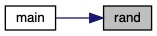
Referenced by main().
◆ rand_r()
◆ realloc()
| void* realloc | ( | void * | ptr, |
| size_t | size | ||
| ) |
Reallocates the given area of memory.
Reallocates the given area of memory. It must be previously allocated by
- See also
- malloc,
- calloc or
- realloc and not yet freed with a call to
- free or
- realloc. Otherwise, the results are undefined.
The reallocation is done by either: 1) expanding or contracting the existing area pointed to by ptr, if possible. The contents of the area remain unchanged up to the lesser of the new and old sizes. If the area is expanded, the contents of the new part of the array are undefined. 2) allocating a new memory block of size size bytes, copying memory area with size equal the lesser of the new and the old sizes, and freeing the old block.
If there is not enough memory, the old memory block is not freed and null pointer is returned. If ptr is NULL, the behavior is the same as calling malloc(size).
- Parameters
-
ptr pointer to the memory area to be reallocated size new size of the array
- Returns
- pointer to new memory allocation. If
sizeis zero (e.g.realloc(ptr,0)) then returns NULL
References free(), malloc(), memcpy(), and NULL.
Referenced by reallocf().

◆ reallocf()
| void* reallocf | ( | void * | ptr, |
| size_t | size | ||
| ) |
Reallocates the given area of memory.
Reallocates the given area of memory. It must be previously allocated by
- See also
- malloc,
- calloc or
- realloc and not yet freed with a call to
- free or
- realloc. Otherwise, the results are undefined.
reallocf is a FreeBSD extension to realloc that frees the input pointer if an error occurrs
This library does not handle the BSD case where realloc(ptr,0) frees the ptr
- Parameters
-
ptr pointer to the memory area to be reallocated size new size of the array
- Returns
- pointer to new memory allocation. If
sizeis zero (e.g.realloc(ptr,0)) then returns NULL
◆ srand()
| void srand | ( | unsigned | seed | ) |
Seeds the pseudo-random number generator used by.
Seeds the pseudo-random number generator used by
- See also
- rand with the value seed. If rand() is used before any calls to srand,
- rand behaves as if it was seeded with srand. Each time rand is seeded with the same seed, it must produce the same sequence of values.
srand() is not guaranteed to be thread-safe.
- Parameters
-
seed the seed value
◆ strtod()
| double strtod | ( | const char *__restrict | str, |
| char **__restrict | str_end | ||
| ) |
Interprets a floating-point value in a byte string pointed to by str.
Interprets a floating-point value in a byte string pointed to by str. Function discards any whitespace characters (as determined by
- See also
- isspace()) until first non-whitespace character is found. Then it takes as many characters as possible to form a valid floating-point representation and converts them to a floating-point value. The valid floating-point value can be one of the following: a) decimal floating-point expression. It consists of the following parts: 1) (optional) plus or minus sign 2) nonempty sequence of decimal digits optionally containing decimal-point character (as determined by the current C locale) (defines significand) 3) (optional) e or E followed with optional minus or plus sign and nonempty sequence of decimal digits (defines exponent) b) binary floating-point expression. It consists of the following parts: 1) (optional) plus or minus sign 2) 0x or 0X c) infinity expression. It consists of the following parts: 1) (optional) plus or minus sign 2) INF or INFINITY ignoring case d) not-a-number expression. It consists of the following parts: 1) (optional) plus or minus sign 2) NAN or NAN(char_sequence) ignoring case of the NAN part. char_sequence can only contain digits, Latin letters, and underscores. The result is a quiet NaN floating-point value.
The functions sets the pointer pointed to by str_end to point to the character past the last character interpreted. If str_end is NULL, it is ignored.
- Parameters
-
str a pointer to the null-terminated byte string to be interpreted str_end pointer to a pointer to character
- Returns
- Floating-point value corresponding to the contents of str on success. If the converted value falls out of range of corresponding return type, range error occurs and HUGE_VAL, HUGE_VALF or HUGE_VALL is returned. If no conversion can be performed, 0 is returned.
◆ strtof()
| float strtof | ( | const char *__restrict | str, |
| char **__restrict | str_end | ||
| ) |
Interprets a floating-point value in a byte string pointed to by str.
Interprets a floating-point value in a byte string pointed to by str. Function discards any whitespace characters (as determined by
- See also
- isspace()) until first non-whitespace character is found. Then it takes as many characters as possible to form a valid floating-point representation and converts them to a floating-point value. The valid floating-point value can be one of the following: a) decimal floating-point expression. It consists of the following parts: 1) (optional) plus or minus sign 2) nonempty sequence of decimal digits optionally containing decimal-point character (as determined by the current C locale) (defines significand) 3) (optional) e or E followed with optional minus or plus sign and nonempty sequence of decimal digits (defines exponent) b) binary floating-point expression. It consists of the following parts: 1) (optional) plus or minus sign 2) 0x or 0X c) infinity expression. It consists of the following parts: 1) (optional) plus or minus sign 2) INF or INFINITY ignoring case d) not-a-number expression. It consists of the following parts: 1) (optional) plus or minus sign 2) NAN or NAN(char_sequence) ignoring case of the NAN part. char_sequence can only contain digits, Latin letters, and underscores. The result is a quiet NaN floating-point value.
The functions sets the pointer pointed to by str_end to point to the character past the last character interpreted. If str_end is NULL, it is ignored.
- Parameters
-
str a pointer to the null-terminated byte string to be interpreted str_end pointer to a pointer to character
- Returns
- Floating-point value corresponding to the contents of str on success. If the converted value falls out of range of corresponding return type, range error occurs and HUGE_VAL, HUGE_VALF or HUGE_VALL is returned. If no conversion can be performed, 0 is returned.
◆ strtol()
| long strtol | ( | const char *__restrict | str, |
| char **__restrict | str_end, | ||
| int | base | ||
| ) |
Interprets an long value in a byte string pointed to by str.
Interprets an long value in a byte string pointed to by str. Discards any whitespace characters (as identified by calling
- See also
- isspace()) until the first non-whitespace character is found, then takes as many characters as possible to form a valid base-n (where n=base) long number representation and converts them to an long value. The valid long value consists of the following parts:
1) (optional) plus or minus sign 2) (optional) prefix (0) indicating octal base (applies only when the base is 8 or 0) 3) (optional) prefix (0x or 0X) indicating hexadecimal base (applies only when the base is
16 or 0) 4) a sequence of digits
The set of valid values for base is {0,2,3,...,36}. The set of valid digits for base-2 integers is {0,1}, for base-3 integers is {0,1,2}, and so on. For bases larger than 10, valid digits include alphabetic characters, starting from Aa for base-11 integer, to Zz for base-36 integer. The case of the characters is ignored.
If the value of base is 0, the numeric base is auto-detected: if the prefix is 0, the base is octal, if the prefix is 0x or 0X, the base is hexadecimal, otherwise the base is decimal.
If the minus sign was part of the input sequence, the numeric value calculated from the sequence of digits is negated as if by unary minus in the result type.
The functions sets the pointer pointed to by str_end to point to the character past the last character interpreted. If str_end is NULL, it is ignored.
If the str is empty or does not have the expected form, no conversion is performed, and (if str_end is not NULL) the value of str is stored in the object pointed to by str_end.
- Parameters
-
str pointer to the null-terminated byte string to be interpreted str_end pointer to a pointer to character. base base of the interpreted integer value
- Returns
- returns the result of the conversion, unless the value would underflow or overflow. If the converted value falls out of range of corresponding return type, a range error occurs (setting errno to ERANGE) and LONG_MAX, LONG_MIN, LLONG_MAX or LLONG_MIN is returned. If no conversion can be performed, 0 is returned.
Referenced by main().
◆ strtold()
| long double strtold | ( | const char * | __restrict, |
| char ** | __restrict | ||
| ) |
◆ strtoll()
| long long strtoll | ( | const char *__restrict | str, |
| char **__restrict | str_end, | ||
| int | base | ||
| ) |
Interprets an long long value in a byte string pointed to by str.
Interprets an long value in a byte string pointed to by str. Discards any whitespace characters (as identified by calling
- See also
- isspace()) until the first non-whitespace character is found, then takes as many characters as possible to form a valid base-n (where n=base) long number representation and converts them to an long long value. The valid long value consists of the following parts:
1) (optional) plus or minus sign 2) (optional) prefix (0) indicating octal base (applies only when the base is 8 or 0) 3) (optional) prefix (0x or 0X) indicating hexadecimal base (applies only when the base is
16 or 0) 4) a sequence of digits
The set of valid values for base is {0,2,3,...,36}. The set of valid digits for base-2 integers is {0,1}, for base-3 integers is {0,1,2}, and so on. For bases larger than 10, valid digits include alphabetic characters, starting from Aa for base-11 integer, to Zz for base-36 integer. The case of the characters is ignored.
If the value of base is 0, the numeric base is auto-detected: if the prefix is 0, the base is octal, if the prefix is 0x or 0X, the base is hexadecimal, otherwise the base is decimal.
If the minus sign was part of the input sequence, the numeric value calculated from the sequence of digits is negated as if by unary minus in the result type.
The functions sets the pointer pointed to by str_end to point to the character past the last character interpreted. If str_end is NULL, it is ignored.
If the str is empty or does not have the expected form, no conversion is performed, and (if str_end is not NULL) the value of str is stored in the object pointed to by str_end.
- Parameters
-
str pointer to the null-terminated byte string to be interpreted str_end pointer to a pointer to character. base base of the interpreted integer value
- Returns
- returns the result of the conversion, unless the value would underflow or overflow. If the converted value falls out of range of corresponding return type, a range error occurs (setting errno to ERANGE) and LONG_MAX, LONG_MIN, LLONG_MAX or LLONG_MIN is returned. If no conversion can be performed, 0 is returned.
◆ strtoul()
| unsigned long strtoul | ( | const char *__restrict | str, |
| char **__restrict | str_end, | ||
| int | base | ||
| ) |
Interprets an unsigned long value in a byte string pointed to by str.
Interprets an unsigned long value in a byte string pointed to by str. Discards any whitespace characters (as identified by calling
- See also
- isspace()) until the first non-whitespace character is found, then takes as many characters as possible to form a valid base-n (where n=base) long number representation and converts them to an unsigned long value. The valid long value consists of the following parts:
1) (optional) plus or minus sign 2) (optional) prefix (0) indicating octal base (applies only when the base is 8 or 0) 3) (optional) prefix (0x or 0X) indicating hexadecimal base (applies only when the base is
16 or 0) 4) a sequence of digits
The set of valid values for base is {0,2,3,...,36}. The set of valid digits for base-2 integers is {0,1}, for base-3 integers is {0,1,2}, and so on. For bases larger than 10, valid digits include alphabetic characters, starting from Aa for base-11 integer, to Zz for base-36 integer. The case of the characters is ignored.
If the value of base is 0, the numeric base is auto-detected: if the prefix is 0, the base is octal, if the prefix is 0x or 0X, the base is hexadecimal, otherwise the base is decimal.
If the minus sign was part of the input sequence, the numeric value calculated from the sequence of digits is negated as if by unary minus in the result type.
If the str is empty or does not have the expected form, no conversion is performed, and (if str_end is not NULL) the value of str is stored in the object pointed to by str_end.
- Parameters
-
str pointer to the null-terminated byte string to be interpreted str_end pointer to a pointer to character. base base of the interpreted integer value
- Returns
- returns the result of the conversion, unless the value would underflow or overflow. If the converted value falls out of range of corresponding return type, a range error occurs (setting errno to ERANGE) and LONG_MAX, LONG_MIN, LLONG_MAX or LLONG_MIN is returned. If no conversion can be performed, 0 is returned.
◆ strtoull()
| unsigned long long strtoull | ( | const char *__restrict | str, |
| char **__restrict | str_end, | ||
| int | base | ||
| ) |
Interprets an unsigned long long value in a byte string pointed to by str.
Interprets an unsigned long long value in a byte string pointed to by str. Discards any whitespace characters (as identified by calling
- See also
- isspace()) until the first non-whitespace character is found, then takes as many characters as possible to form a valid base-n (where n=base) long number representation and converts them to an unsigned long long value. The valid long value consists of the following parts:
1) (optional) plus or minus sign 2) (optional) prefix (0) indicating octal base (applies only when the base is 8 or 0) 3) (optional) prefix (0x or 0X) indicating hexadecimal base (applies only when the base is
16 or 0) 4) a sequence of digits
The set of valid values for base is {0,2,3,...,36}. The set of valid digits for base-2 integers is {0,1}, for base-3 integers is {0,1,2}, and so on. For bases larger than 10, valid digits include alphabetic characters, starting from Aa for base-11 integer, to Zz for base-36 integer. The case of the characters is ignored.
If the value of base is 0, the numeric base is auto-detected: if the prefix is 0, the base is octal, if the prefix is 0x or 0X, the base is hexadecimal, otherwise the base is decimal.
If the minus sign was part of the input sequence, the numeric value calculated from the sequence of digits is negated as if by unary minus in the result type.
If the str is empty or does not have the expected form, no conversion is performed, and (if str_end is not NULL) the value of str is stored in the object pointed to by str_end.
- Parameters
-
str pointer to the null-terminated byte string to be interpreted str_end pointer to a pointer to character. base base of the interpreted integer value
- Returns
- returns the result of the conversion, unless the value would underflow or overflow. If the converted value falls out of range of corresponding return type, a range error occurs (setting errno to ERANGE) and LONG_MAX, LONG_MIN, LLONG_MAX or LLONG_MIN is returned. If no conversion can be performed, 0 is returned.
References isspace(), NULL, s, and ULLONG_MAX.
Referenced by strtoull_test().

◆ system()
| int system | ( | const char * | ) |
◆ wcstombs()
◆ wctomb()
| int wctomb | ( | char * | , |
| wchar_t | |||
| ) |