#include <stddef.h>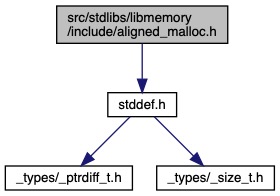

Macros | |
| #define | memalign(align, size) aligned_malloc(align, size) |
| A convenience macro for the Linux API. More... | |
Functions | |
| void * | aligned_malloc (size_t align, size_t size) |
| Allocated aligned memory. More... | |
| int | posix_memalign (void **memptr, size_t alignment, size_t size) |
| Posix Memory Alignment Extension. More... | |
| void | aligned_free (void *ptr) |
| Free aligned memory. More... | |
Macro Definition Documentation
◆ memalign
| #define memalign | ( | align, | |
| size | |||
| ) | aligned_malloc(align, size) |
A convenience macro for the Linux API.
memalign() is simply a convenience definition which provides the commonly-used Linux API memalign. This forwards the arguments to aligned_malloc() and behaves in the same manner.
- Parameters
-
align Alignment of the memory block. Alignment refers to the starting address of the memory block. If 32-byte alignment is requested, the start address of the returned pointer will be 32-byte aligned. Note: Alignment must be a power of two. (1, 2, 4, 8, etc.) size Size of the memory allocation
- Returns
- Pointer to allocated memory. If memory was not successfully allocated, the function will return NULL. This can happen due to invalid input (alignment is 0, size is 0, alignment is not a power of 2) or due to insufficient memory left for the requested allocation.
Function Documentation
◆ aligned_free()
| void aligned_free | ( | void * | ptr | ) |
Free aligned memory.
Free memory that was allocated using aligned_malloc(). This function must not be called on memory which was not allocated with aligned_malloc().
- Parameters
-
ptr Pointer to the aligned_memory() block that will be freed.
Free aligned memory.
References assert, free(), and p.
Referenced by aligned_malloc_test(), embutil::aligned_sptr(), embutil::aligned_uptr(), and posix_memalign_test().

◆ aligned_malloc()
Allocated aligned memory.
Allocate memory with at least alignment align and size size Memory which has been allocated with aligned_malloc() must be freed by calling aligned_free(). Calling free() will result in a panic or other negative effects.
- Parameters
-
align Alignment of the memory block. Alignment refers to the starting address of the memory block. If 32-byte alignment is requested, the start address of the returned pointer will be 32-byte aligned. Note: Alignment must be a power of two. (1, 2, 4, 8, etc.) size Size of the memory allocation
- Returns
- Pointer to allocated memory. If memory was not successfully allocated, the function will return NULL. This can happen due to invalid input (alignment is 0, size is 0, alignment is not a power of 2) or due to insufficient memory left for the requested allocation.
Allocated aligned memory.
References align_up, assert, malloc(), NULL, p, and PTR_OFFSET_SZ.
Referenced by aligned_malloc_test(), embutil::aligned_sptr(), embutil::aligned_uptr(), and posix_memalign().

◆ posix_memalign()
Posix Memory Alignment Extension.
Generated aligned memory. This function forwards the request to aligned malloc. Allocated memory must be freed with aligned_free().
- Parameters
-
memptr A pointer to the pointer which will store the aligned memory. The memory must be freed with aligned_free(). memptr must not be NULL. alignment The target alignment for the memory. Must be a power of 2. size The size of the allocation. Must be > 0.
- Precondition
memptris not NULL.alignmentis power-of-2.size> 0.
- Returns
- ENOMEM if memory could not be allocated, EINVAL if alignment is not a power-of-2, and 0 on successful allocation.
References aligned_malloc(), assert, EINVAL, ENOMEM, IS_POWER_2, NULL, and r.
Referenced by posix_memalign_test().